
Fact Checked by: Payal Mamotra & Medically Reviewed by: Our Medical Team
Key Takeaways:
A bassinet is already designed for maximum comfort, but simple adjustments—like keeping it near your bed, using a swaddle blanket, and maintaining a soothing sleep environment—can help your baby feel more secure. Avoid adding extra bedding or toys, as they pose safety risks. Instead, focus on warmth, gentle sounds, and a high-quality bassinet that meets safety standards for a restful and safe sleep.
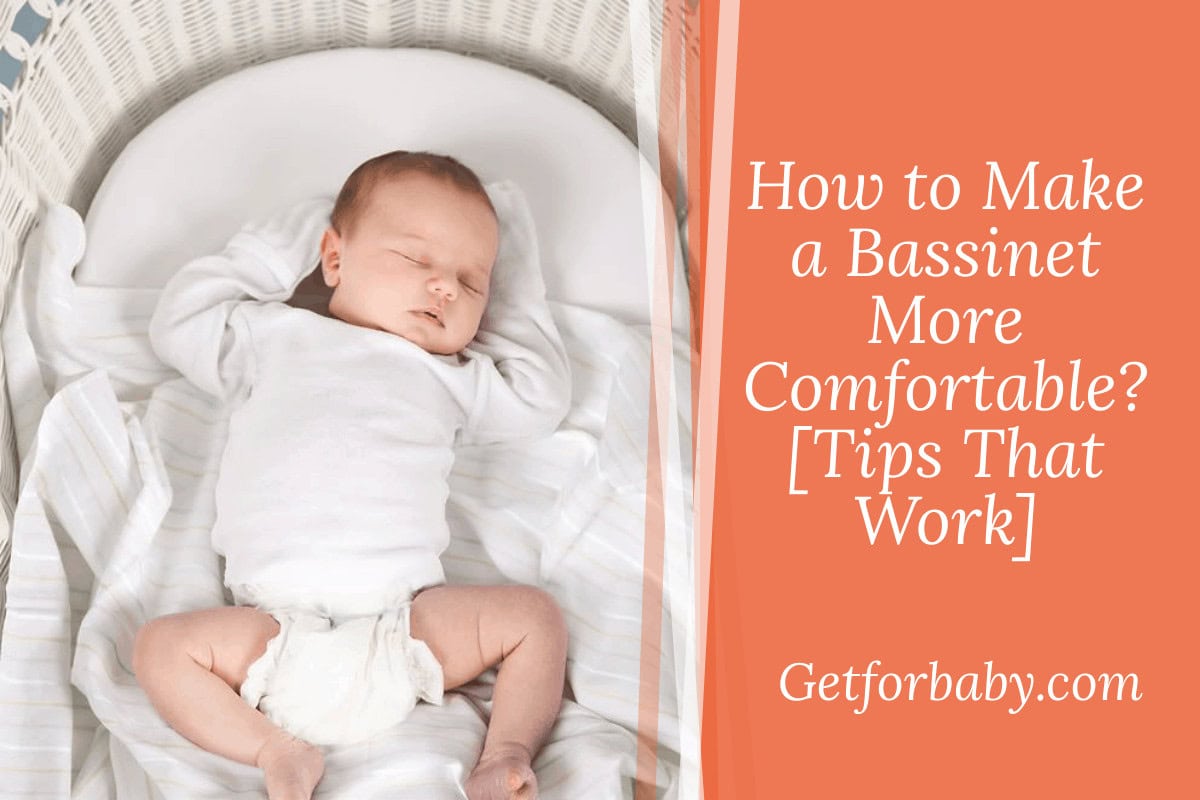
Does your baby start crying the moment you put her in the bassinet?
Maybe you’re wondering if making the bassinet more comfortable will help her relax. The answer is a big yes—but with some important conditions.
So, why does your baby cry when placed in the bassinet? What’s the real reason behind it?
It may sound complicated, but the answer is simple: babies are used to the warmth and comfort of their mommy’s body. Since birth, that’s all they’ve known—so a bassinet can feel unfamiliar and uncomfortable.
Before we jump into solutions, here’s a truth bomb:
“Nothing can make a bassinet more comfortable.” Why? Because they’re already designed with high-quality materials to support your newborn’s comfort and safety.
However, with the right adjustments, you can enhance your baby’s comfort without compromising safety.
Still, many parents believe that adding a pillow, toy, or soft blanket will help their baby feel secure. Unfortunately, that can actually increase the risk of suffocation or injury.
In fact, in September 2012, Onsafety.cpsc.gov published a report warning parents not to place any accessories inside a bassinet.
CPSC staff estimates that between 1992 and 2010, there were nearly 700 deaths involving infants 12 months or younger related to pillows and cushions placed in or near a baby’s sleep environment. Almost half of the infant crib deaths and two-thirds of bassinet deaths reported to CPSC each year are suffocations caused by pillows, thick quilts, and overcrowding in the baby’s sleeping space.
According to the Mayo Clinic, soft bedding, pillows, and plush toys in a baby’s sleep area increase the risk of suffocation and SIDS (Sudden Infant Death Syndrome).
The Sleep Foundation also emphasizes that a firm, flat surface with no loose bedding is the safest sleep environment for your newborn.
How To Make a Bassinet More Comfortable?
If you can’t place additional items in the bassinet, how can you still make it more comfortable for your baby? The good news is—you can do plenty of safe things to help your little one feel more relaxed in their bassinet. For example, you can:
- Place the bassinet near your bed
- Use a swaddling blanket
- Try different comfort techniques to see what works best
Here are some tips and tricks I’ve learned from my own experience as a mom of twins. These methods worked well for me—so let me share how you can make a bassinet more comfortable for your baby, too.
1.) Place the Bassinet Near Your Bed
Babies love to be cuddled, as it makes them feel warm and secure. Being held by a loved one mimics the feeling of being inside the womb—where they spent nine months.
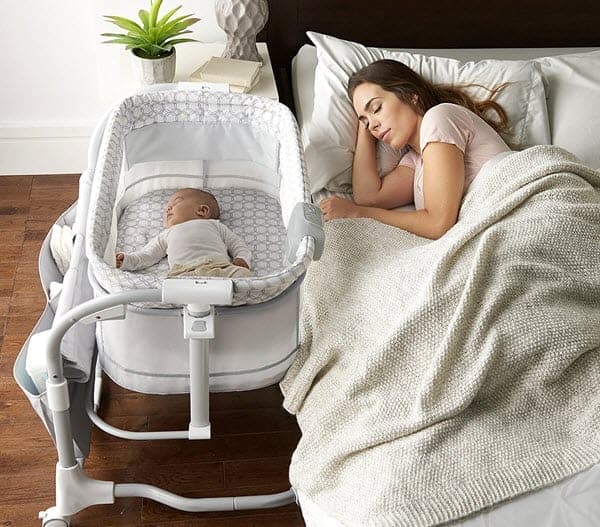
A bassinet is already designed to be comfortable—soft, small, snug, and padded to provide warmth, much like a mother’s womb.
But it doesn’t have your scent or the feeling of being held. If your baby has trouble sleeping in the bassinet, try making them more comfortable by simply keeping the bassinet close to your bed.
Some parents prefer a co-sleeper bassinet, such as the First Years Close and Secure Sleeper.
Studies show that having a warm, loving person nearby comforts babies, helping them fall asleep faster and stay asleep longer.
📢 The AAP recommends that infants sleep in the parents’ room, close to the parents’ bed, but on a separate surface designed for infants, ideally for at least the first six months. This practice can decrease the risk of SIDS by as much as 50%. (safesleep.mo.gov)
🎥 Watch the video to hear what James McKenna, Ph.D., Director of the Mother-Baby Behavioral Sleep Laboratory, says about it.
Keeping your baby close at night has many benefits. You can monitor them easily, respond to their needs quickly, and provide whatever comfort they need—anytime.
Placing your baby’s bassinet next to your bed can benefit both of you. Your baby will feel your warmth and smell your scent, helping them sleep more peacefully through the night.
Co-sleeping isn’t ideal for everyone. Some parents have smaller beds, while others—like me—move around a lot while sleeping. Don’t take the risk.
💡 For parents who can’t co-sleep, there are special bedside bassinets. These can be adjusted to your bed height, so your baby stays within arm’s reach—making nighttime feeding and soothing easier, without leaving your bed.
2.) Use a Swaddle Blanket in the Bassinet
A baby’s skin is sensitive to environmental changes—even a slight shift in room temperature can disrupt their sleep. Babies come from the womb, where the temperature is perfectly regulated—something their bodies are naturally used to.

🩺 Swaddling can help babies feel secure and may promote better sleep. However, it’s essential to swaddle correctly to reduce the risk of hip dysplasia and ensure the swaddle isn’t too tight, allowing for hip movement. (healthychildren.org)
This is why, even during summer, it’s often recommended to wrap your baby up. Unlike a standard blanket, a swaddle blanket is not loose—it’s snugly wrapped around your baby, making it safe and comforting.
Most swaddle blankets come with buttons, Velcro, or zippers to keep your baby securely bundled. There’s no risk of the fabric covering their face, so suffocation is avoided.
🎥 Watch this video by Dr. Jagruti Anadkat on how to swaddle your baby safely before placing them in the bassinet.
A swaddle blanket does more than keep your baby warm—it also helps them feel snug and secure, just like they did in the womb.
💡 Tip! I remember the first time I tried swaddling my twins—I wasn’t sure if they’d like it or feel restricted. But within minutes, they went from fussy to calm, almost like magic. If you’re struggling with settling your baby, give swaddling a try—it might just be the trick you need.
Swaddling mimics the comfort of being held, which babies absolutely love. A good swaddle blanket recreates that feeling beautifully.
Swaddle blankets come in many shapes, sizes, and materials. Need one with an attached hood or a fleece lining? No problem—you’ll find plenty of options.
📢 Note: If you’re looking for a way to keep your baby warm during winter, check out our guide to the Best Blankets for a Bassinet. Also, if you’re concerned about maintaining a cozy sleep space, read this helpful guide: How To Keep a Bassinet or Crib Warm in Winter
Swaddle blankets are also incredibly versatile. You can use them in the bassinet, in the stroller, or even as a lightweight sleeping bag.
3.) Make Them Feel Secure in Their Bassinet
The third key factor is ensuring your baby feels safe and secure in their sleeping environment. If they don’t feel secure, they simply won’t sleep—it’s as simple as that!
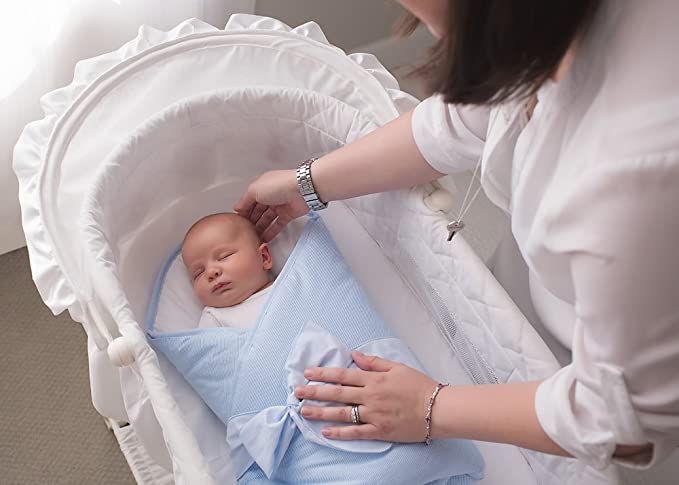
Providing the right temperature, sleeping angle, and just the right amount of support is essential.
It may take some trial and error, as every baby has their own preferences.
💡 Understanding what comforts your baby is crucial. Eventually, you’ll figure it out—because no one knows your baby better than you do.
🎥 Watch this video: “The Power of Parents’ Touch”
Watch this video by Dr. Jagruti Anadkat, explaining how to swaddle your baby safely before placing them in the bassinet:
Babies enter the world from a safe, enclosed environment. They spend nine months growing in a warm, dark, and quiet space that becomes even snugger as they develop.
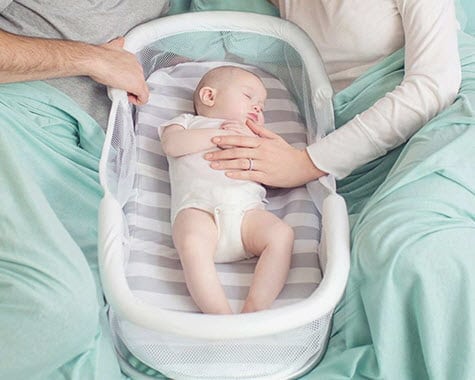
You can’t expect a baby to adjust to the outside world instantly. Newborns are fragile and need a space that mimics the conditions they were used to.
If you’re trying to make your baby comfortable, variety is key.
Experiment with different bassinet blankets and sleep positions to see what works best.
It takes time, but once you understand what your baby loves, everything becomes easier—and both of you can enjoy a good night’s sleep.
Here are a few tips:
- Keep your baby warm by layering clothing or using a snug wrap. Make sure they aren’t exposed to cool drafts or breezes.
- Swaddling helps with both warmth and comfort. It creates the cozy sensation of being hugged.
- Reduce noise and light. Bright lights and loud sounds can easily disturb a newborn.
- Try a vibrating bassinet to gently soothe your baby. But once they fall asleep, turn it off to avoid dependency. Learn more: Is a Vibrating Bassinet Safe?
- Play natural sounds or lullabies. These can help your baby fall asleep faster and stay asleep longer. Experiment to see which sound they respond to best. (We’ll talk more about this in the next section.)
4.) Play Lullabies or Read a Book
Babies love soothing sounds, which is why many bassinets come with built-in music or lullaby features. But is there actual science behind it?
According to research, musical sounds are processed in specialized areas of the brain.
The National Centre for Biotechnology Information reports that soothing music and lullabies can:
- Lower a baby’s heart rate
- Reduce stress hormone levels
- Regulate their sleep cycle
💡 Studies also show that soft, repetitive melodies create a calming effect, helping babies fall asleep faster and sleep longer. There’s strong evidence that lullabies improve infant sleep quality.
But lullabies aren’t just about rhythm—they also contain words, which help with cognitive and language development. When babies hear words and tones, it enhances their ability to perceive emotion and language early on.
🎥 Watch Dr. Lynch explain: “How Music Affects the Health of Premature Babies”
Babies and Their Deep Connection to Music
Babies form emotional connections with music from the very beginning. It’s not just about soothing them—it can stimulate their brain, even before birth!
Yes, you read that right—once babies develop hearing in the womb, they begin absorbing sounds. That’s why many experts encourage parents to talk to their babies before they’re born.
This not only helps babies recognize familiar voices after birth but also makes it easier to calm them down when needed.
The Power of Reading to Your Baby
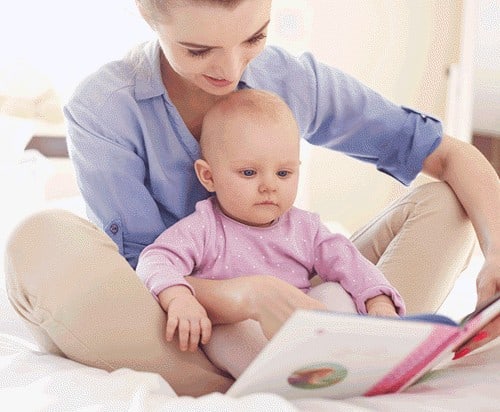
Even if your newborn doesn’t understand the words, reading books can be incredibly beneficial.
📚 Reading is a great bonding activity and also supports early language comprehension.
When your baby hears the changes in your tone, they begin to recognize emotion—a foundation for healthy emotional and language development.
💡 In short, if you want your baby to feel more comfortable in the bassinet, try playing music or reading softly. Sometimes, that gentle rhythm or familiar voice is all they need to drift off peacefully.
5.) Why Invest in a Premium Bassinet?
You might follow all the steps above perfectly—but if your bassinet isn’t high quality, all that effort may still fall short.
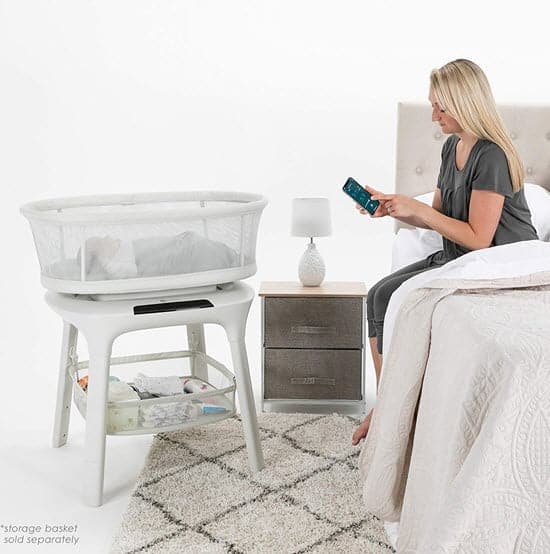
🛏️ Investing in a premium bassinet is worth it. In the early months, bassinets are often better than cribs. They’re cozy, snug, and designed to support a newborn’s comfort and safety.
However, not all bassinets are created equal. They vary in:
- Price
- Quality
- Features
- Comfort level
Modern bassinets now come with advanced features like:
- Auto cry detection
- Rocking motions
- Vibration and music
- Lullabies and night lights
- Built-in canopies
💡 Not sure if your current bassinet is the right one? Read this guide: How To Choose a Bassinet
What Should You Look For?
When shopping for a bassinet, find the highest quality model within your budget. Here’s what to check:
- Is it adjustable?
- Does the mattress feel thick and supportive?
- Are the sides soft but safe?
- Does it align with your bed height?
- Does it feel and look durable?
- What extra features does it offer?
- Can it be customized to suit your baby?
- Does it meet safety standards recommended by the CPSC?
- Is it a JPMA-certified bassinet?
Why It’s Worth the Effort
Choosing the right bassinet isn’t always easy—it takes time and research. But remember: this is your baby’s first bed. The extra effort now will ensure your little one sleeps safely and comfortably.
Check out our curated list of Best Bassinets of 2025—each one is designed with your baby’s needs in mind.
Your baby will spend most of their first 5 to 6 months sleeping in a bassinet. But eventually, for safety, they’ll need to transition to a crib.
Read these guides to know when to stop using a bassinet:
Winding Up
I’m 100% sure that 90% of your problems will be solved using these tips and tricks—because they worked for me!
Taking care of a baby isn’t easy, especially for first-time parents.
Sleep is essential for babies—their growth and development largely happen while they rest. That’s why a quality bassinet matters so much.
It offers a snug, portable, and often affordable sleeping space. It also saves space, is easy to clean, and may include helpful extras like rocking motions or soothing sounds.
And don’t forget to clean your bassinet properly—a hygienic sleep space is key to your baby’s health and comfort.
At the end, here a Secret Tip: The “5S Rule” Want to know the ultimate trick to putting your baby to sleep? Follow the “5S Rule” in this video:
I hope you found this guide on how to make baby bassinet more comfortable helpful! Now it’s your turn—what do you do to keep your baby calm and cozy?
Drop your tips in the comments below and help other moms and dads make quick, informed decisions.
If this article helped you, don’t forget to share it with your parenting community!
SHARE THE ARTICLE
About Author

Harvinder Singh
Senior Writer & Baby Gear Researcher
Harvinder Singh is a dedicated writer and baby gear researcher at Getforbaby.com. With a strong background in product testing and a practical understanding of infant care, he helps parents make confident buying decisions through honest, research-backed. Read More
We believe you should always know where our information comes from. Here are the trusted sources we used while writing this article:
- Missouri Safe Sleep – AAP Safe Sleep Recommendations
- HealthyChildren.org – A Parent’s Guide to Safe Sleep
- PubMed Central – Sleep Environment and Sudden Infant Death Syndrome (PMC6481793)
- CPSC – Bassinets and Cradles Safety Guidelines
- CPSC – Safe Sleep Resources
- AAP – Safe Sleep Practices for Infants
- KidsHealth – Understanding SIDS
- WebMD – Parenting Advice and Baby Health
- Pathways.org – The ABCs of Safe Sleep
Getforbaby editorial team is committed to providing the most helpful, updated & trustworthy information. When creating or updating the existing content, we rely on credible sources, respected health organizations, to support the facts within our articles. Read Our Editorial Process.