
Fact Checked by: Payal Mamotra & Medically Reviewed by: Our Medical Team
Key Takeaways:
Move your baby from a bassinet to a crib when they start rolling over, exceed the weight limit (typically 15–20 lbs), or seem cramped. The AAP recommends transitioning by 4–6 months for safety. Ensure a firm mattress, no loose bedding, and a safe sleep environment for a smooth transition.

Making your baby sleep in a bassinet is a great idea in the early months.
It offers a safe and cozy space and helps lower the risk of Sudden Infant Death Syndrome (SIDS). You can also keep your baby close for easy nighttime feedings and monitoring.
Bassinets provide a cozy place for newborns to sleep. However, they are not a long-term sleep option.
As your baby grows and becomes more active, they will eventually outgrow the bassinet.
At some point, you need to move them to a crib. This gives them more room to move, keeps them safer, and helps them sleep better.
A crib helps babies stretch, roll, and sleep comfortably. This support is key for their important growth milestones.
Why Is It Important to Move at the Right Time?
I wasn’t sure when to move my baby to a crib, and I worried about whether they’d sleep well in a bigger space. But one night, I woke up to find my baby had rolled onto their side in the bassinet. That moment made me realize I couldn’t delay the transition any longer—it was a clear safety risk.
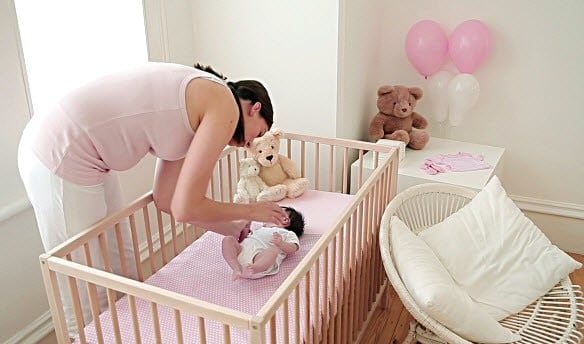
The American Academy of Pediatrics (AAP) suggests moving your baby to a crib at the right time to ensure their safety and support their development.
According to Dr. Rachel Moon, MD, FAAP, Chair of the AAP Task Force on SIDS:
“Parents are advised to move their infants to a crib or bassinet in the parents’ bedroom to decrease the risk of SIDS.”
Source: AAP
This highlights the importance of a safe sleep environment and shows why transitioning at the right time is crucial. However, there isn’t a one-size-fits-all timeline—every baby is different. The best time to make the switch depends on several factors.
Common Concerns Parents Have About Transitioning to a Crib
- What’s the right age to transition?
- What signs should I look for?
- What if my baby doesn’t like the crib?
If you’re asking these questions, you’re not alone! While age can be a factor, the best way to determine when to move your newborn to a crib is by observing their development and comfort level.
This guide will review the key signs indicating when to transition from bassinet to crib. So, let’s dive in and help you determine the right time to make the move!
When To Move From Bassinet to Crib?
Moving from a bassinet to a crib depends on three main factors: rolling, age and weight, and how comfortable your baby feels in the bassinet.
- Rolling: If your baby starts rolling over in the bassinet, it’s a clear sign that it’s time to switch to a crib.
- Age & Weight: If your baby is over the age or weight limit set by the bassinet manufacturer, stop using it and transition to a crib.
- Comfort: A crib offers more room for your baby to stretch and move. If your baby seems cramped in the bassinet, it’s time for more space.
Paying attention to these factors ensures a smooth and safe transition for your little one.
Let’s go over these points in more detail with examples.
1.) Baby Starts Rolling Over (Safety Hazard!)
One of the biggest signs your baby is ready for a crib is when they start rolling over independently.
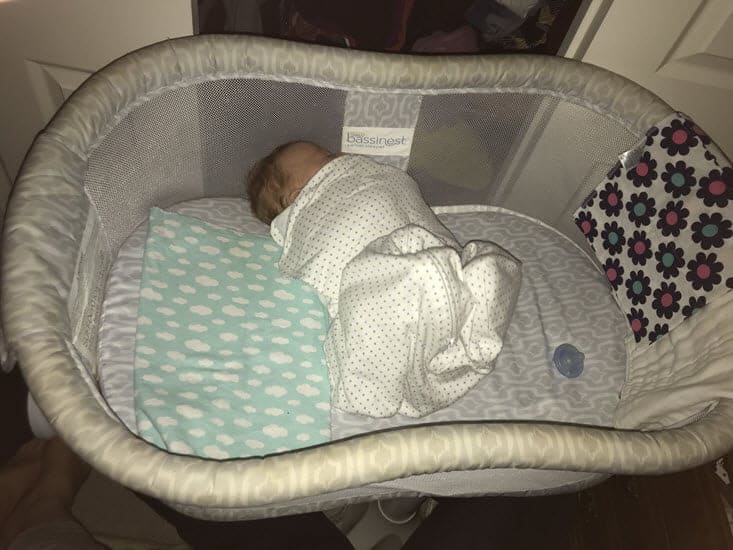
The American Academy of Pediatrics (AAP) states:
“Once an infant exhibits signs of attempting to roll, caregivers should ensure the infant is placed in a crib or bassinet for sleep.”
AAP Source
When my baby first started rolling, I thought it was adorable—until I realized they were struggling to turn back in the bassinet. One night, I found them stuck against the side, frustrated and unable to move. That was the moment I knew it was time for a crib.
Rolling over in a bassinet can be dangerous. The small space may limit movement and increase the risk of suffocation.
But Why Is Rolling Over in a Bassinet Dangerous?
Bassinets are small and enclosed, which is great for newborns but risky for active babies. If a baby rolls to the side, they might not have enough space to turn back.
This can raise the risk of suffocation or breathing difficulties.
Here’s why rolling can be dangerous:
- Soft-sided bassinets (made of mesh or fabric) are breathable, but they can still trap a baby in a bad position.
- Hard-sided bassinets (plastic or wood) can be riskier if a baby’s face is pressed against the side.
- Lightweight bassinets may tip over if a baby moves forcefully.
💡 Once your baby starts rolling, it’s time to move them to a crib!
What to Expect community forum:
“She started rolling from back to tummy and would get stuck in her bassinet at night. My sister gave us a crib, so that same day we put it together and the bassinet went to storage. Honestly, it was a very smooth transition…”
Read the full thread
Note: Most babies start rolling between 3 and 4 months, though some may begin as early as 2 months or as late as 5–6 months.
Early signs that rolling is coming soon:
- Lifting their head and pushing up during tummy time
- Rocking side to side when lying on their back
- Kicking their legs and twisting their body
2.) Baby Reaches the Bassinet’s Age or Weight Limit
Every bassinet has a recommended age and weight limit set by the manufacturer. Ignoring these limits can put your baby at risk of injury. If your baby exceeds these limits, the bassinet may become unstable, increasing the risk of collapse, tipping over, or sagging.

Common Age & Weight Limits for Bassinets:
| Factor | Typical Limit | Notes |
|---|---|---|
| Age Limit | 4–6 months | Some bassinets allow prolonged use, but most are designed for early use. |
| Weight Limit | 15–20 lbs (7–9 kg) | Varies by brand; exceeding the limit increases tipping or collapse risk. |
Check your bassinet’s official instruction manual or the manufacturer’s website for exact limits.
Signs That Your Baby Has Outgrown the Bassinet
| Sign | What It Means |
|---|---|
| Feels heavy when placed inside the bassinet | Your baby is approaching or exceeding the weight limit, making it less stable. |
| The bassinet starts creaking or bending under weight | It may no longer support your baby safely. |
| Legs or arms frequently hit the sides | Your baby needs more space to move and stretch comfortably. |
If you notice any of these signs, it’s time to make the switch to a crib.
1.2 Baby Appears Cramped or Uncomfortable
Even if your baby hasn’t started rolling or reached the weight limit, they might still be too big for the bassinet. Some babies grow quickly. A bassinet that once felt spacious can suddenly feel tight and restrictive.
If your baby is waking up more often than usual, check for lack of space. Babies need room to move naturally in their sleep—and a crib allows just that.
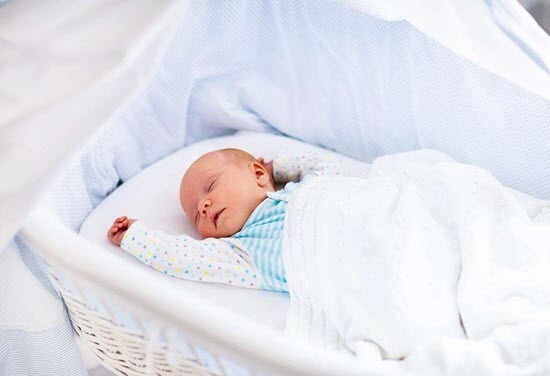
Signs That Your Baby Needs More Space
| Sign | What It Means |
|---|---|
| Frequently hitting the sides while moving | Your baby is too big for the bassinet and can’t move freely. |
| Waking up more often, appearing restless or frustrated | They may be uncomfortable due to limited space. |
| Can’t stretch arms or legs comfortably | The bassinet is restricting their natural movement and sleep position. |
💡 Don’t rely only on age—watch for physical signs. Some babies may need to switch earlier, while others (like preemies) may fit in a bassinet a bit longer.
These three factors—rolling, outgrowing limits, and appearing cramped—are the clearest indicators it’s time to transition out of the bassinet.
Crib Safe Sleep Guidelines (AAP & CPSC)
The Consumer Product Safety Commission (CPSC) encourages everyone to adopt the “Bare is Best” principle:
“Bare is Best – nothing but a fitted sheet in a crib, bassinet, or play yard.”
CPSC Source
Stay away from pillows, bumpers, blankets, and stuffed toys. These items can raise the risk of suffocation and overheating.
The American Academy of Pediatrics (AAP) also gives clear safety guidelines that help reduce the risk of Sudden Infant Death Syndrome (SIDS) and other sleep-related dangers.
Creating a safe sleep environment is essential once your baby moves from a bassinet to a crib. Following the guidelines below ensures that your baby sleeps safely and comfortably.
Key Safety Recommendations for the Crib
Here are the most important crib safety rules every parent should follow:
- Always place your baby on their back to sleep. This significantly reduces the risk of SIDS. Stomach or side sleeping can make breathing more difficult.
- Use a firm mattress with a snug fit. A firm mattress helps prevent suffocation and supports proper spinal development. It should fit snugly in the crib with no gaps.
- Keep crib slats within 2-3/8 inches apart. Wider gaps can be dangerous—your baby’s head, arms, or legs could get stuck.
- Avoid pillows, bumpers, blankets, and stuffed toys. These soft items increase the risk of suffocation and overheating.
- Ensure the crib is free from hazards. Regularly check for loose screws, splinters, or broken parts that could pose a risk.
- Keep cords, blinds, and mobiles out of reach. Dangling cords or objects near the crib can be a strangulation hazard.
Recommended Transition Age According to the CPSC
The Consumer Product Safety Commission (CPSC) recommends moving your baby to a crib by 4–6 months of age. If your baby shows signs of outgrowing the bassinet—like rolling over, exceeding weight limits, or seeming cramped—do it sooner.
Some parents worry about moving their baby too soon. But this guideline helps keep your baby safe as they grow and become more active.
💡 Tip: The first few nights in a crib might be an adjustment. Keep your baby’s routine consistent and ensure the room stays at a comfortable temperature (68–72°F) to help them sleep peacefully.
Note:- Need help with the transition process? Check out this detailed guide: How to transition baby to crib
Word of Advice
Looking back, I wish I had moved to a crib sooner. At first, I resisted the change, but I realized that waiting too long can make the transition harder. The earlier you make the switch—before your baby starts rolling or feeling cramped—the smoother it will be for both of you.
Transitioning from a bassinet to a crib is a big step. However, it’s crucial for your baby’s safety and growth. Pay attention to the signs, make the transition at the right time, and always keep safe sleep practices in mind.
A well-timed move means better sleep for your baby—and you, too! Embrace the change with confidence. You’re creating the best sleeping space for your little one.
Every baby is different, and your observations matter the most.
While guidelines provide a general timeframe, if your baby seems uncomfortable, outgrowing their space, or too active for a bassinet, it’s likely time to transition. Go with what feels right for you and your baby!
We’d love to hear your experience! When did you move your baby from a bassinet to a crib? Share your thoughts or questions in the comments below—we’re happy to help!
Don’t forget to share this article—because sharing is caring! 😊
Frequently Asked Questions
Q: What age should I move my baby from a bassinet to a crib?
A: No one-size-fits-all answer exists, but most babies are ready to move to a crib between 4 and 6 months. The key indicators are:
- Rolling over
- Exceeding the bassinet’s weight limit
- Appearing cramped or uncomfortable
If your baby shows any of these signs earlier, transitioning sooner is best.
Q: How do I know if my baby is too big for the bassinet?
A: Watch for these signs:
- Your baby frequently bumps into the sides while moving
- They wake up more often, appearing restless or fussy
- They have outgrown the weight limit (usually 15–20 lbs)
- The bassinet creaks or bends under their weight
If one or more of these signs are present, it’s likely time to move to a crib.
SHARE THE ARTICLE
About Author

Harvinder Singh
Senior Writer & Baby Gear Researcher
Harvinder Singh is a dedicated writer and baby gear researcher at Getforbaby.com. With a strong background in product testing and a practical understanding of infant care, he helps parents make confident buying decisions through honest, research-backed. Read More
We believe you should always know the source of the information you’re seeing.
- CPSC – Safe Sleep Resources
- AAP – Safe Sleep Practices for Infants
- CPSC – Bassinet Manufactures Safety
- KidsHealth – Understanding SIDS
- AAP Pediatrics – 2022 Update on Sleep-Related Infant Deaths
- WebMD – Parenting Advice and Baby Health
- Help Me Grow MN – Baby Milestones Guide
- AAP – 2020 Infant Safe Sleep Tips
- Growth Charts – CDC (Boys, Girls)
- NCBI – Bassinet Use and Sudden Unexpected Death in Infancy
Getforbaby editorial team is committed to providing the most helpful, updated & trustworthy information. When creating or updating the existing content, we rely on credible sources, respected health organizations, to support the facts within our articles. Read Our Editorial Process.